STORE
STORE 




 MY BEACH SOCCER
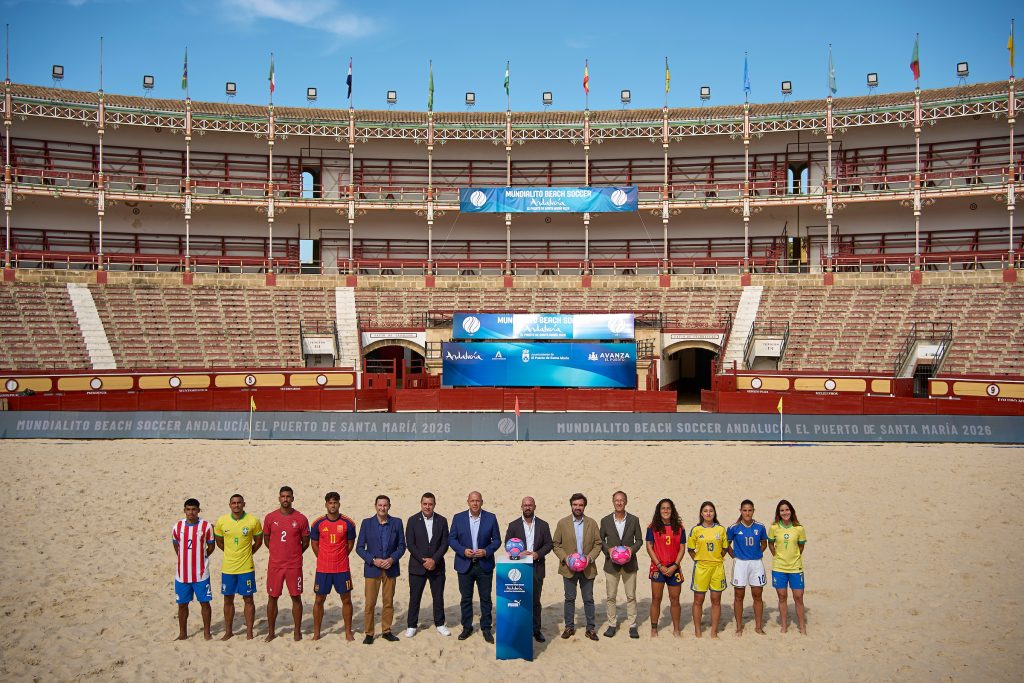
The iconic Real Plaza de Toros provided the setting for the official presentation of the 26th edition of the Mundialito, which brings together eight national teams for three days of Beach Soccer action in El Puerto de Santa María.
The countdown to the 26th Mundialito is officially underway.
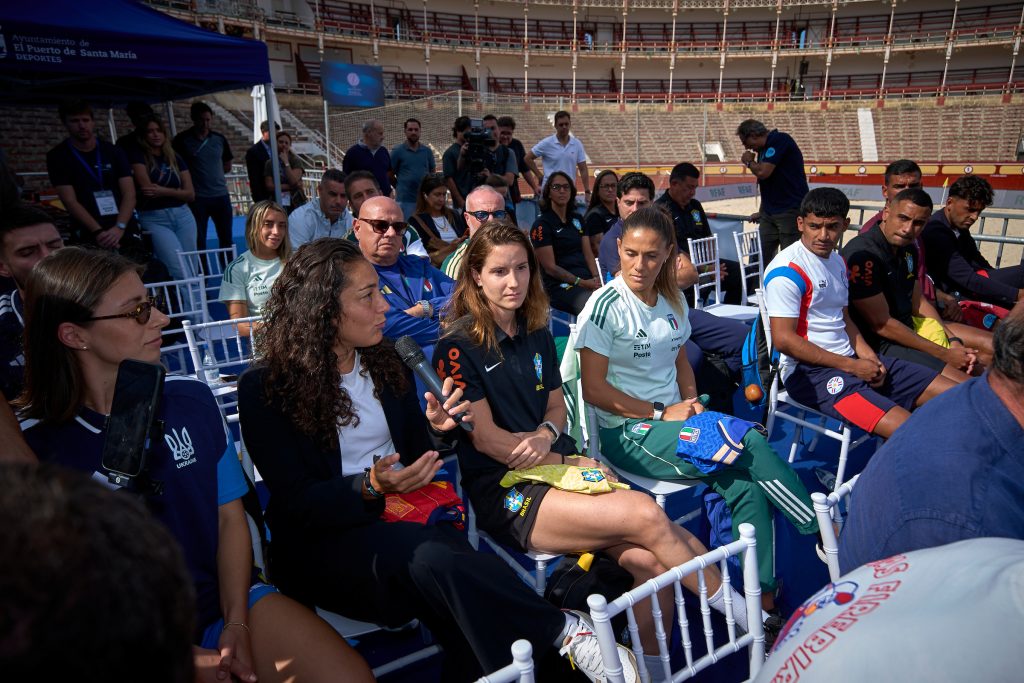
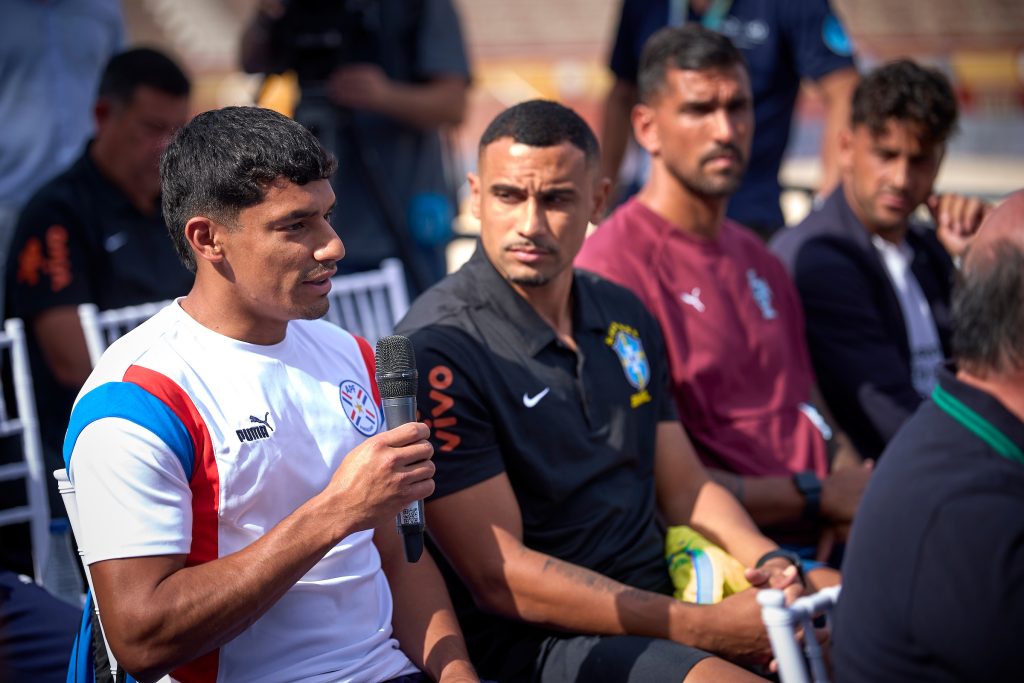
The Real Plaza de Toros de El Puerto de Santa María provided an imposing backdrop for the official presentation of the competition this Thursday, with the press conference held in the stadium’s VIP area and attended by the captains of all eight participating teams.
The event brought together representatives of the local, regional, national and international institutions supporting the return of one of the historic competitions in international Beach Soccer.
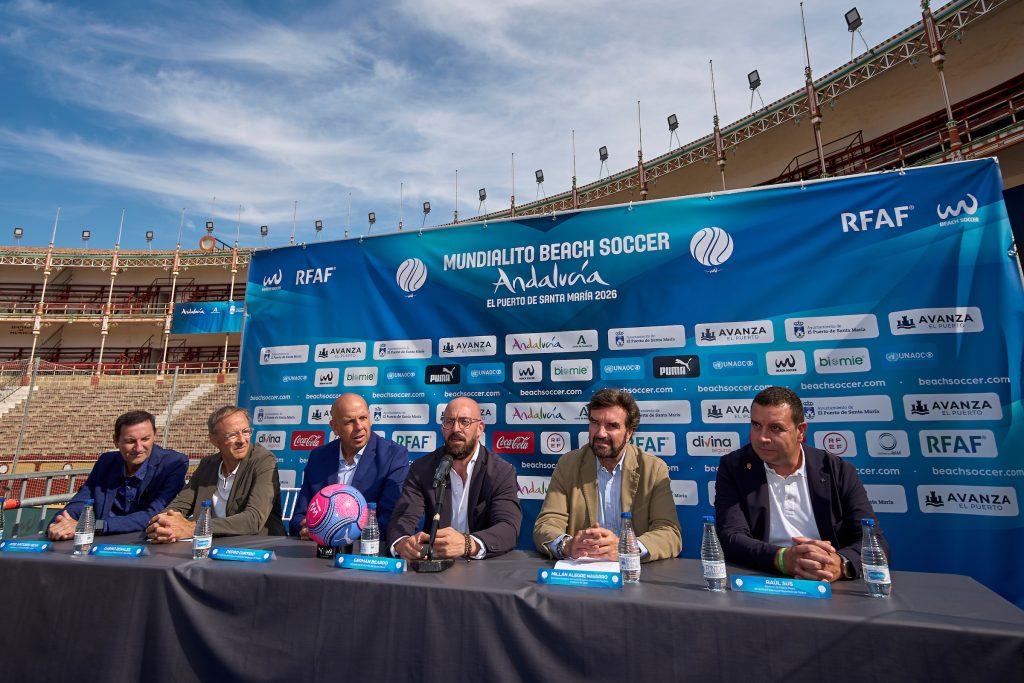
Joining the captains at the presentation table were Germán Beardo, Mayor of El Puerto de Santa María; Millán Alegre Navarro, Territorial Delegate for Culture, Historical Heritage and Sport of Cádiz; Gabino Renales, Vice-President of Beach Soccer Worldwide; Pedro Curtido, President of the Real Federación Andaluza de Fútbol; Raúl Sus, Director of Beach Soccer at the Real Federación Española de Fútbol; and José Antonio Neva, RFAF Cádiz Delegate President.
The 26th edition of the Mundialito will take place from 9 to 11 October 2026 at the Real Plaza de Toros de El Puerto de Santa María, bringing together the men’s and women’s national teams in a unique three-day celebration of Beach Soccer.
With eight national teams – four men’s and four women’s – taking part, the competition will feature 12 matches, four per day, with admission free for spectators.
More than 5,000 people are expected to attend the competition throughout the three days, while the Mundialito will also reach audiences around the world, with its matches being broadcast via streaming and television in 180 countries.
A meeting of the world’s finest
The men’s competition features four of the leading nations in international Beach Soccer.
Brazil (1) arrives in El Puerto de Santa María as the reigning FIFA Beach Soccer World Cup champions and defending Mundialito champions.
Spain (5) will compete on home sand as the reigning European champions, while Portugal (3) return to a competition they have won seven times, having also claimed two FIFA Beach Soccer World Cup titles.
Completing the men’s line-up is Paraguay (9), current Copa América runners-up, who make their debut on the competition after having won the Acapulco Beach Soccer Cup earlier this year.
The women’s tournament brings together another outstanding quartet.
Spain (1) arrive as reigning European champions and the winners of the first two women’s editions of the Mundialito.
Italy (5) will seek revenge of the Viareggio Superfinal as they challeng for the title alongside Euro Beach Soccer League semi-finalist Ukraine, and Brazil (6), one of the major forces in international Beach Soccer.
One league, one champion
The competition format is straightforward.
The four national teams in each category will play a single round-robin league, with every team facing each of the other three once across the three matchdays.
At the end of the three rounds, the team finishing top of the standings will be crowned champion of the 26th Mundialito.
A competition with history
Founded in 1994 in Copacabana, Rio de Janeiro, the Mundialito has established itself as one of the landmark competitions in international Beach Soccer.
Brazil are the record holders in the men’s competition, with 15 titles, while Portugal have lifted the trophy seven times and Spain twice.
The most recent edition was held in Ayamonte, Andalucía, in 2023, with Brazil claiming the title.
The women’s competition was introduced in 2022, with Spain making history by winning the first two editions.
Now, more than three decades after the Mundialito was first created on the sands of Copacabana, the competition returns to Andalucía – this time to the historic setting of the Real Plaza de Toros de El Puerto de Santa María.
From 9 to 11 October, eight national teams, two categories and 12 matches will write the next chapter of the Mundialito’s history.